I used Canva to make a review sheet of the various ways to say “only” in Korean.
I have used ‘Screencast-O-Matic’ to record myself translating a Korean text about Kimchi in real time. I was getting rusty in my translation ability, but pleasantly surprised how quickly it comes back with practice. Basically, as Korean is a S-O-V language, you need to read the sentence backwards in your head and then translate back into English familiar S-V-O syntax.
These are some tricky advanced multi-meaning verbs I am studying right now. I used a Google docs and converted it into a PDF. All photos courtesy of Unsplash
Using Screencast-o-matic software, I read a Korean advanced dialogue in Korean and then give the English translation and identify and explain the Korean idioms that which contain the word rice cake. Rice cakes, signifying good fortune and giving, are ubiquitous in Korean culture, forming a huge part of Korean food culture and gift giving. Therefore, over time many culturally specific idioms relating to rice cakes are present in the Korean language.
Ms. Humphries gave an informative presentation on technology and inclusion in B.C. classrooms, in particular the BC EdAccess society, a volunteer run organization which serves families of children with disabilities. She asserted that ableism – the discrimination and social prejudice against people with disabilities based on the belief that typical abilities are superior still exists in the contemporary classroom. Citing examples of how technology in infrastructure already allows learner independence (i.e. wheelchair accessibility and ramps, Humphries believes information technology will also allow students to more fully participate and excel in the learning space. She gave two examples, one being the AAC system, which is a way of typing to communicate and the FTI system, which makes sound clearer for students.
It is clear that the first step to accommodating students starts with awareness and communication with students to see if additional help is required. Teachers need to be informed about the IEP and make themselves available to parents to see what resources are available to enhance inclusion for these students. Teachers will need flexibility in all stages of lesson planning, field trips and assessments to allow full participation for all members of a learning community. I can only imagine how frustrating and painful it may be for parents if their child does not receive the adequate support in the classroom or additional consideration is portrayed as a burden that gets in the way of instruction for ‘typical’ students. Sadly, so many decisions in the school system are dictated by available funding and staffing considerations. Humphries raised the issue of defining the term “disabled” and I am interested in the protocols involved in determining whether a student would benefit from specialized instruction outside of the general classroom. I have witnessed classes where a student was clearly incapable of participating in an upper level history class because of a medical condition and this was often a distraction in the classroom. I fully support an inclusive classroom when merited, but in my example, and I am not an expert whatsoever, it appeared the student was kept in the classroom out of principle rather than benefit to all concerned
Unlike onomatopoeias, which attempt to mimic a particular sound, mimetic verbs attempt to add feeling to a motion or movement to give the listener a more detailed picture of an action. Mimetic verbs are arguably the final hurdle in achieving fluency and sounding “Korean” as they are routinely used by native Korean speakers. These are difficult for Korean second language learners to learn as there are few resources for formal instruction on this topic. Moreover, there is a astonishingly a specific mimetic word for almost every kind of movement until recently, there was little standardization of spelling and slight variations in sound are still very common.
Let’s look at some examples:
오늘 아침에 일어나서 교육에 응용기술 수업에 다니기에 대학교에 운전 해 갔어요.
I got up early this morning and drove to my applied technology in education class.
오늘 아침에 벌떡 일어나서 교육에 응용기술 수업에 다니기에 대학교에 운전 해 갔어요.
I sprung out of bed early this morning and drove to my applied technology in education class.
쓰레기가 많아서 방을 청소할 수밖에 없어요.
I had to clean the room because it was so dirty.
쓰레기가 많아서 싹 방을 청소할 수밖에 없어요.
I had to completely clean (from top to bottom) the room because it was so dirty.
As you can see above, the addition of a mimetic verb adds an emphasis of degree feeling, imagery which really lets the listener visualize the action.
Here are 14 Mimetic Verbs I will try to learn to use this week:
- 칭칭 8. 졸졸
- 가득 9. 뻘뻘
- 깜짝 10. 꼭꼭
- 엉엉 11. 철철
- 낄낄 12. 벅벅
- 콕콕 13. 펑펑
- 꽁꽁 14. 텅텅
- a. crying profusely
- b. water coming out slowly
- c. sweating a lot
- d. exerting effort repeatedly
- e. somebody scratching f. going around something
- g. water, blood, energy flowing
- h. somebody snickering
- i. stinging pain j. using an object frivolously
- k. something being frozen l. being completely empty
- m. something wrapping around
- n. completely full / stuffed

Distributed learning refers to non-face-to-face communication between students and teachers. The pandemic forced people for better or worse to transition away from face-to-face instruction. One silver lining of this shift is that people ended up engaging with and becoming familiar with technology that they probably would not have voluntarily used if it were not necessary.
Some have argued that online learning is a poor replacement for face-to-face learning and learning tends to be passive whereas others claim the debate surrounding pedagogy vs. modality depends on classroom design. While it is true that whether a learning experience is passive or dynamic depends on the pedagogy applied in that modality, I find that passivity and fatigue set in much faster in a distant online format than a in class format. Importantly, the question as to who ultimately benefits from distributed learning will influence how we move forward. I believe that this was initially a trojan horse by tech companies claiming that it would lessen the workload on instructors in the hope that they in turn would recruit students to adopt this technology and the utility of this technology for students was serendipitous.
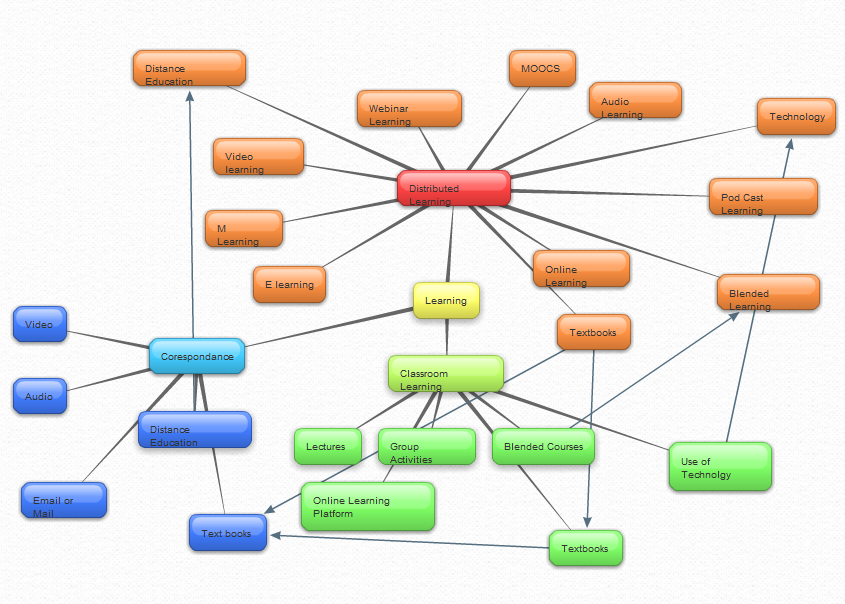
As our class is an example of blended learning, the professor demonstrated how our interactions, content delivery and assessments range on a spectrum of teacher and student control and asynchronous and synchronous learning. The variety provides different avenues for communication. Could this be the future of public-school learning? Is it necessary for every student to come to brick and mortar facilities everyday when the technology enables to learn remotely? Is the school just a baby-sitting center that allows parents to work full-time? Without a doubt, this technology has allowed for a democratization of learning that will allow rural access to high-quality education.
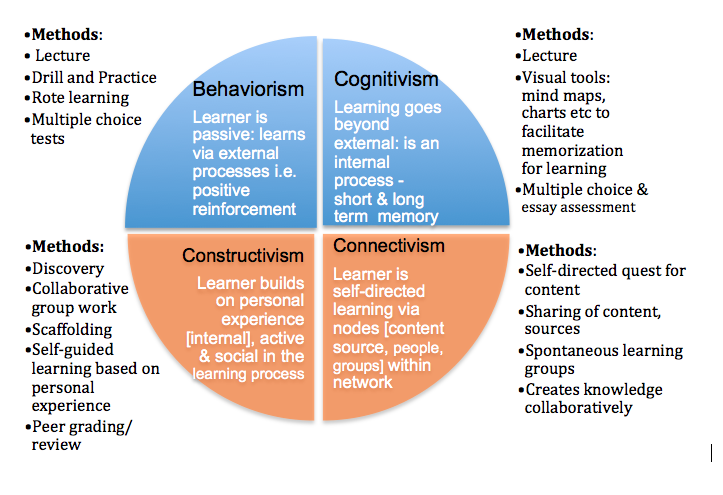
Last week Trevor MacKenzie gave an informative and very illuminating presentation positing the need for a constructivist approach to learning which argues for student agency and control of learning in the classroom. He emphasized the need for students to be both cognitively and physically active in the learning space. In the Q & A portion of his presentation, he demonstrated constructivism in action by explaining how he co-constructs rubrics and core competencies with students. I found this fascinating because I had viewed things like competencies and rubrics to be areas of concern for the teachers only. Now that I know that when students fully understand what is being assessed and the gap between the teacher’s expectations (be it curriculum or assessment) and students understanding is bridged, it makes sense that student performance will improve and I will definitely try to implement this in my classroom.
I am still a little confused about his explanation of transitioning away from novel studies units to a unit centered around concepts. I understand that this is an attempt to include different underrepresented voices and identities into the canon, but I hope that it would not exclude amazing literature simple for the crime of being old.
MacKenzie also rightly claimed that our learner narrative shapes how we as teachers teach but that not all students learn exactly like the teacher. I never really had considered how the way I learned in the past would influence my teaching practice and how it will inevitably manifests itself in the way I delivered course content and assessment. The thing that I took away from his presentation is how impactful our words and dialogue with students have on a student’s identity and future learning experiences. In the future, I hope that I will remain conscious of that when I speak with students and understand the consequences of these interactions. The unscripted interaction with a former professor of Trevor’s underscored that point. What to the professor was probably a innocuous moment of consideration was interpreted as a profound act of compassion and generosity to the student that positively affected his learning journey.
Troy: positive integration of cell phones in the classroom
Brian: Alternatives to cell phone use
Joel: challenges with cell phone integration in the classroom
Raphaela: Current School district policies regarding cell phone use in the classroom across B.C.
- Positive Integration of Cell Phones in the Classroom
Cell phones allow students to have: access to a calculator, documentation through a camera, as well as access to the internet. With the advances in smartphones, phones are often able to act as a personal computer that can be taken beyond the classroom provided that students have access to the same resources or tools at school as if they were at home (ensures transferability of work from school and home, barring internet connection). Phones are an equalizer in education access and a portal to the internet, Thomas and O’Bannon mention that as many as 80% will have access to mobile devices by 2015 and two thirds of high school students will have access (2013). Situations where a set of computers are required can call for advanced planning and setup for teachers to enable their students to access the internet. Rather than deal with cell phone use some schools have outright banned them. Phones are an extremely powerful tool as they can act as a vehicle for: content creation, assessment and reflection, camera feature for documentation of projects, (Thomas, et al. 2013). Phones can act in the same way as computers do, but with added flexibility. Access to cellphones in the classroom can provide opportunities for cooperative problem solving, research, and general collaboration. Phones have built in mathematical tools to perform calculations which can reduce a burden on many students to buy a calculator (graphing or simple). Students could learn through a video or an audio which would not be readily available otherwise, a second source of learning has been found especially useful in a class like dance (Li,Zhou, Teo 2018). Having access to phones allows for the submission of surveys quickly and anonymously.
2. Alternatives to Cell Phones in the Classroom
Much of the polemic surrounding cellphones in public schools centers on a dichotomy of a blanket ban on cellphones, claiming they are a disruptive menace to learning and those that begrudgingly accept their presence as an inevitability and we should we utilize their positive attributes in order to assist learning as much as possible. I think the only solution is a compromise. Teachers should try to explore alternatives to cell phones in the class and not use it as a default tool of learning (Hance, 2019)I would start with something as simple as a cell phone holder on tables in class. Cell phones would be placed in holders at the start of class and only come out when the teacher instructs them to do so to facilitate the lesson. The cell phone therefore is visible to the teacher. Second, students constantly on their phones in class is an indicator that they are not engaged in the class material. Students should be given clear objectives in each class and transitions between each activity in the lesson need to be smooth and efficient as it is in these pauses that students instinctively reach for our phones. When students interact with each other meaningfully, or possibly competitively, they build social and communication skills and will forget about their phones. For example, if students are not actively participating in an activity, they should be given the task of evaluating peers. Introverted students can articulate opinions on exit sheets to be submitted in lieu of active vocal contributions. Lastly, one of my main concerns about cell phone use is its deleterious effects on memory, or digital amnesia. To address this, I would encourage using ‘brain dumps’, in which research indicates improves long-term memory when we are routinely asked to pull ideas from memory. We should encourage students to do brain dumps on what they’ve learned recently as opposed to reflexively telling students to reach for phones. Extensions to this could be making lists, drawing pictures and free writes
The following are additional alternatives tools which can replace cell phone use in the classroom.
| Videos | Engaging Slide Decks |
| Peer teaching | Silent reading |
| Passion projects | Role plays |
| Outdoor education | Journaling |
| (QTF) Question Formulating Techniques |
Hance, M. 2019. 5 Ways to keep students off their cell phones in the classroom https://www.teachhub.com/technology-in-the-classroom/2019/07/5-ways-to-keep-students-off-their-cell-phones-in-the-classroom/
10 no-internet remote learning activities. (2020, March 30). Retrieved from https://ditchthattextbook.com/no-internet-remote-learning/
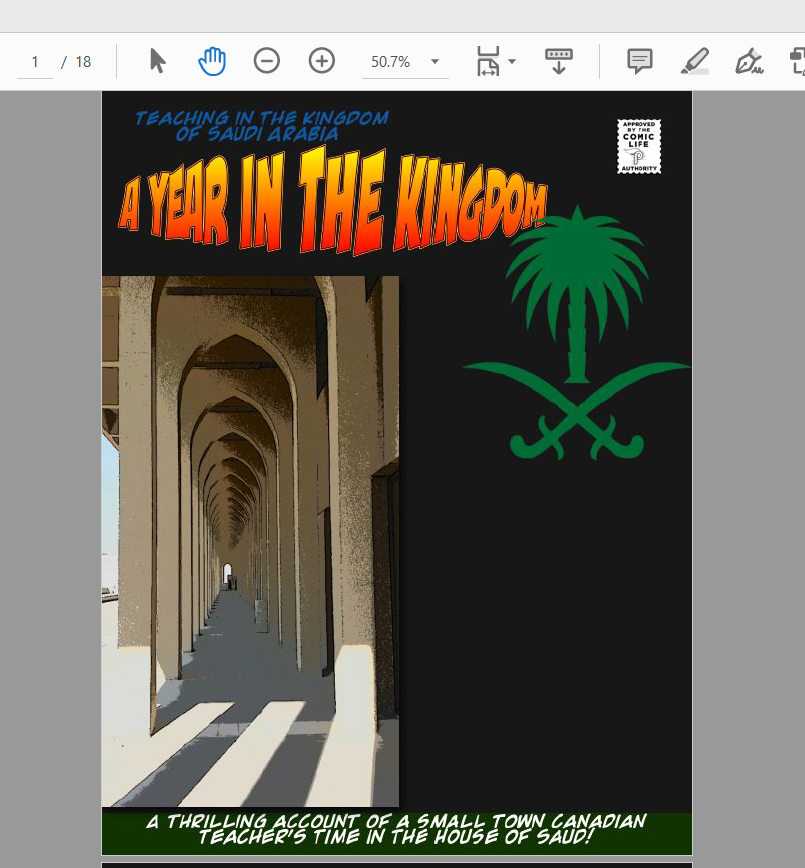
This is a little off topic from learning Korean but I just wanted to share a project I’m working on for my multiliteracies class. This is the title page from a graphic novel I’m working on using Comic 3 software.
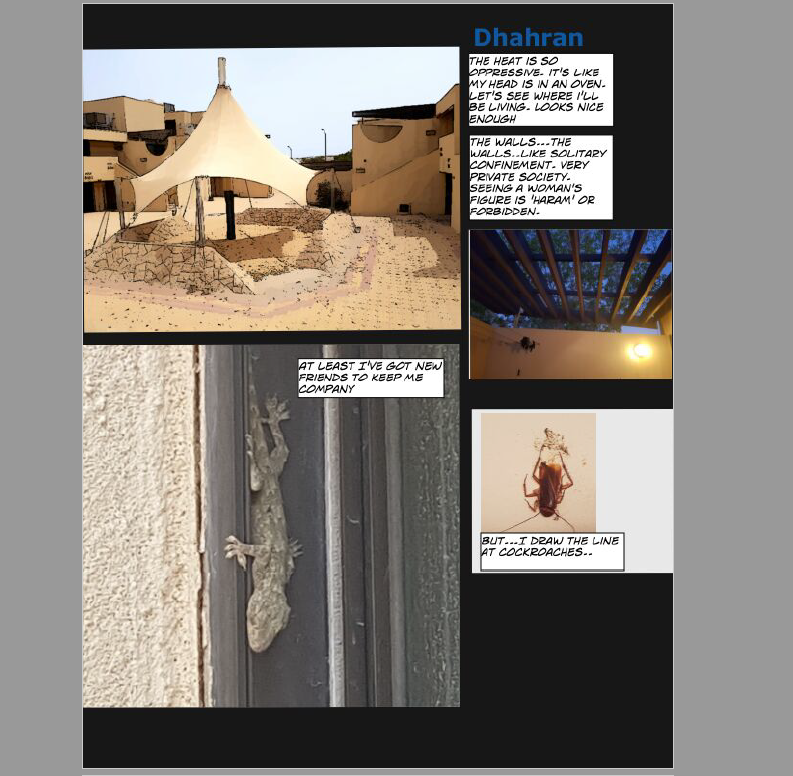
Definitely not Stan Lee but I see a lot of potential in this program for getting students to demonstrate understanding of periods in history in a visually appealing way.