morningcalm

Discovering Korean

Page 3 of 3

EdTech Reflection # 2: Teaching and FIPPA compliance

What?

The advent of cloud computing, or using the internet to manage and store data on remote network services, has caused an enormous transfer of personal information previously stored on personal computers to both domestic and foreign online service providers, particularly social networking sites. To regulate this, FIPPA (Freedom of Information and Protection of Privacy Act) ensures that information is used and collected in a legal, appropriate way.

So what?

FIPPA affects how a teacher may use personal information about their students. For example, any information which can identify a student must remain confidential and secure. Moreover, it is required that personal information be stored on servers within Canada unless consent is first given by students and parents. Importantly, even though the majority of students are already routinely using a variety of social media and web tools in their private lives including Google Docs, Dropbox and Skype, incorporating that technology into the classroom creates new responsibilities on the part of the instructor. Teachers will therefore have to determine whether the benefits of the technology outweigh the potential inconvenience with regards to an assignment. As students have the right to refuse the disclosure of personal information, teachers will need alternative means of creating an assignment that still meets the instructors intended learning goals without putting them at a disadvantage with to other students because of their refusal. However, many technologies allow the uses of aliases, which would allow teachers to get around difficulties regarding FIPPA compliance. I fear that many teachers, especially ones who are uncomfortable with social media and technology, will avoid the potential headaches involved with sites such as Instagram and opt for safer, traditional means of communication and information delivery.

Now what?

Although the challenges of FIPPA compliance seem daunting, it is encouraging to know that there are many tools which can replace many of the perceived ‘taboo’ apps. For example, students can communicate and share information using Word Press hosting, which is web hosted in Canada. Mattermost, which we use in EDCI 336. can replace non -compliant sites such as Slack and Microsoft Word can be an alternative to Google Docs. With a clear understanding of the value of a given technology and a little flexibility, teachers can safely navigate around FIPPA while still encouraging students to engage in multi-literacies in their learning.
Reflection #1 – Most Likely to Succeed

Western education to date has focused on vocational training for preparation in a manufacturing economy where academic subjects were arranged in hierarchy according to economic value. In addition, due to technological innovation, many of the jobs of the people our education systems currently produces will likely disappear in the near future.

Adaptability rather than short term recall of content will be the key to success. Schools like High Tech High are showing that hitherto disconnected subjects need to be integrated, but school subjects are siloed, thus we can’t transfer knowledge to future problems.  Here, interdisciplinary approaches connect content from alternative perspectives, integrating ideas that enable learners to make hitherto unseen connections to foster new frameworks. Additionally, conventional schools uniformly assess students to meet a subjective standard level of education; assessment must be meaningful to each student and accurately determine preparedness for advancement. Schools need to blend factual knowledge and concrete skills with student-led process learning. Giving students agency to tackle problems in a way that interests them is intrinsically motivating and provides the conduit to creativity, which is the goal of teaching.

The experience of High Tech High shows the need for tighter relationships between teaching programs and schools such as a standardization of pedagogical methods is required. Paradoxically, the classroom management component of my Educational Psychology course was removed, which exemplifies the current disconnect between the profession and teacher programs.  

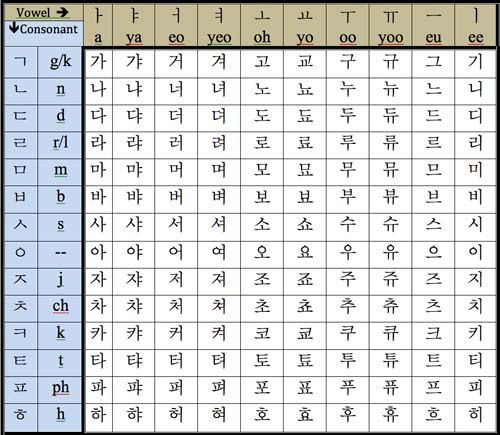
The Korean Language

Korean is spoken by more than 72 million people living on the Korean peninsula. Although it differs slightly in spelling, alphabet, and vocabulary between the two regions, Korean is the official language of both South Korea and North Korea. Outside of the Korean peninsula, there are about two million people in China who speak Korean as their first language, another two million in the United States, 700,000 in Japan, and 500,000 in the Russian regions of Kazakhstan and Uzbekistan.

todaytranslations.com

Welcome and Introduction

Before proceeding with this first blog post, we expect you to consider your privacy preferences carefully and that you have considered the following options:

  1. Do you want to be online vs. offline?
  2. Do you want to use your name (or part thereof) vs. a pseudonym (e.g., West Coast Teacher)?
  3. Do you want to have your blog public vs. private? (Note, you can set individual blog posts private or password protected or have an entire blog set to private)
  4. Have you considered whether you are posting within or outside of Canada? This blog on opened.ca is hosted within Canada. That said, any public blog posts can have its content aggregated/curated onto social networks outside of Canada.

First tasks you might explore with your new blog:

  • Go into its admin panel found by adding /wp-admin at the end of your blog’s URL
  • Add new category or tags to organize your blog posts – found under “Posts” (but do not remove the pre-existing “EdTech” category or sub-categories, Free Inquiry and EdTech Inquiry). We have also pre-loaded the Teacher Education competencies as categories should you wish to use them to document your learning. If you would like to add more course categories, please do so (e.g., add EDCI 306A with no space for Music Ed, etc.)
  • See if your blog posts are appearing on the course website (you must have the course categories assigned to a post first and have provided your instructor with your blog URL)
  • Add pages
  • Embed images or set featured images and embed video in blog posts and pages (can be your own media or that found on the internet, but consider free or creative commons licensed works)
  • Under Appearance,
    • Select your preferred website theme and customize to your preferences (New title, etc.)
    • Customize menus & navigation
    • Use widgets to customize blog content and features
  • Delete this starter post (or switch it to draft status if you want to keep for reference)

Do consider creating categories for each course that you take should you wish to document your learning (or from professional learning activities outside of formal courses). Keep note, however, that you may wish to use the course topic as the category as opposed to the course number as those outside of your program would not be familiar with the number (e.g., we use “EdTech” instead of “edci336).

Lastly, as always, be aware of the FIPPA as it relates to privacy and share only those names/images that you have consent to use or are otherwise public figures. When in doubt, ask us.

Please also review the resources from our course website for getting started with blogging:

Newer posts »

© 2025 morningcalm

Theme by Anders NorenUp ↑